Dave Ulrich Three Box Model HR Explained – A Complete Guide
The Dave Ulrich Three Box Model HR is based on the notion of shifting the role of HR from administration to strategy.

Human Resources models help explain the role of HR in the business, how HR adds value to the business, and how the business influences HR. Several HR models have been introduced over the decades to give HR professionals a foundation to transform their functions.
One of the most popularly used HR models of all time is the one introduced by Dave Ulrich, the co-founder of the RBL group who has been ranked as the number one management Guru by Business Week, one of the top-5 coaches by Forbes, and one of the world’s best business thinkers by Thinkers-50.
The Dave Ulrich Three Box Model HR is based on the notion of shifting the role of HR from administration to strategy. In this guide, let us try to learn more about this HR model and understand how it can help businesses today.
Dave Ulrich Three Box Model HR Explained

The Three Box Model by Dave Ulrich is specifically intended to help businesses organize the functions of human resources. He suggested in his 1997-book ‘Human Resource Champions’ that HR functions need to be segmented in large-scale businesses and enterprises. Most part of the book concerns four key HR roles that make an organization effective. The book is available on Amazon here (this is not an affiliate link)
The four HR roles defined by Ulrich are – Strategic Partner, Change Agent, Administrative Expert, and Employee Champion. He viewed a successful HR business partnership as the sum of these roles. Shortly after the book was published, a three-box model was developed for the organization of HR function which quickly became popular.
The three-box model or the three-legged stool model is an interpretation of Dave Ulrich’s HR model. This ‘HR-partnering model’ is a broad-based approach to the delivery of HR services prevailing in large, complex enterprises consisting of several business units. Companies adapt the Ulrich model to their organizational structure to create a basis for the HR function.
Ulrich Three Box Model
The Three-Box Model by Dave Ulrich is made up of three components as explained below.
HR Business Partners
HR business partners are generally embedded within business units where they work as generalists to staff and managers, helping them with HR support and advice based on the business needs. They are often viewed as an interface between managers and services under the broader HR function.
Centres of Expertise
These are small teams of experts possessing specialized knowledge and they work together to create and implement best practices in specific areas. These include employee relations, change management, learning and development, recruitment, and more.
Shared Devices
This is a separate business unit that takes care of administrative activities for other units. Shared service centres take several forms. They either involve HR-specific transactions or are combined with other functional transactions. Some of the most common activities associated with shared services include intranets, help desks, and self-service portals.
Dave Ulrich Business Partner Model

Dave Ulrich’s Business Partner Model was introduced in 1997 in the book ‘Human Resource Champions’ as a foundation to organize how HR functions are performed. The core of the model is the concept that HR should be closely aligned with the centre and top of the organization structure -with the managers and leaders. Business partnering makes HR a part of the organizational strategy rather than a personnel function.
The business partner model is gaining immense popularity among organizations as a way to organize their HR function as it proves to be adding value to the business. Through partnering, HR can be viewed to be boosting balance and change by aligning stakeholders to organizational goals. This means HR is aimed at recruiting the right talent and motivating it without losing track of larger organizational goals and performance.
The effectiveness of the Ulrich Business Partner Model, therefore, depends on the implementation and the people. A broader approach of HR business partnering benefits from the following practices.
- Proactive Approach: HR professionals should always work within the concept of business strategy. It is about setting objectives, responding to challenges, and consistently adding value.
- Cost-Effectiveness: A strategic approach allows demonstrating cost-effectiveness through solutions and contributions, improving the credibility of HR as a result.
- Solution-Focused: Instead of fulfilling the daily HR functions, business partnerships should work more holistically to transform strategy into action.
- Relationship-Based: A successful HR business partnering relies on productive relationships and collaboration resulting from them. HR ultimately drives a well-networked organization in the end.
HR business partnering is not a one-size-fits-all solution; it looks different from one organization to another as it should be aligned with the strategies of the organization. However, if taken as a broad approach, it can be applied to any organization in a way that adds value.
Dave Ulrich HR Competency Model
The HR competency model introduced by Dave Ulrich aims to help organizations make an effective shift from strategic management to administration. It is a blueprint meant to streamline HR functions and does not simply translate to jobs. The misconception of the model results in companies launching business partners without focusing on other segments.
HR professionals should understand that transforming HR does not rely on HR functions but a combined effort of senior management and staff to make things work. The principles surrounding the David Ulrich HR competency model include:
- Creating a unified structure delivering value
- Defining clear distinction of HR roles
- Creating a competitive advantage for the company
- Measuring the company’s performance based on the metric defined
Organizations should look to Dave Ulrich HR competency model as a standard and try to get creative with the design which can be applied to their organizational structure and needs.
Afterthoughts
This article is the summary and highlight of the HR model proposed in the 90s.
Mr. Dave Ulrich was kind enough to comment and provide us with the update:
Since then, we have written a number of books, done extensive research, worked with 100’s of organizations, and updated the model for HR effectiveness.
We have identified 9 dimensions of an effective HR department with governance (3 box) being one of the nine and HR competencies another one of the nine.
In terms of HR competencies, we have done 8 rounds of research to identify the competencies that deliver personal, stakeholder, and business results. The latest round is included here.
The takeaway from this continuing research is that HR matters more than ever for all stakeholder results.
Related Articles
-
Is time running out for the employee engagement survey?
Employee engagement surveys have dominated HR for decades. Culture15 founder Charlie Coode argues behaviour may be a better measure for the AI era.
5–7 minutes -
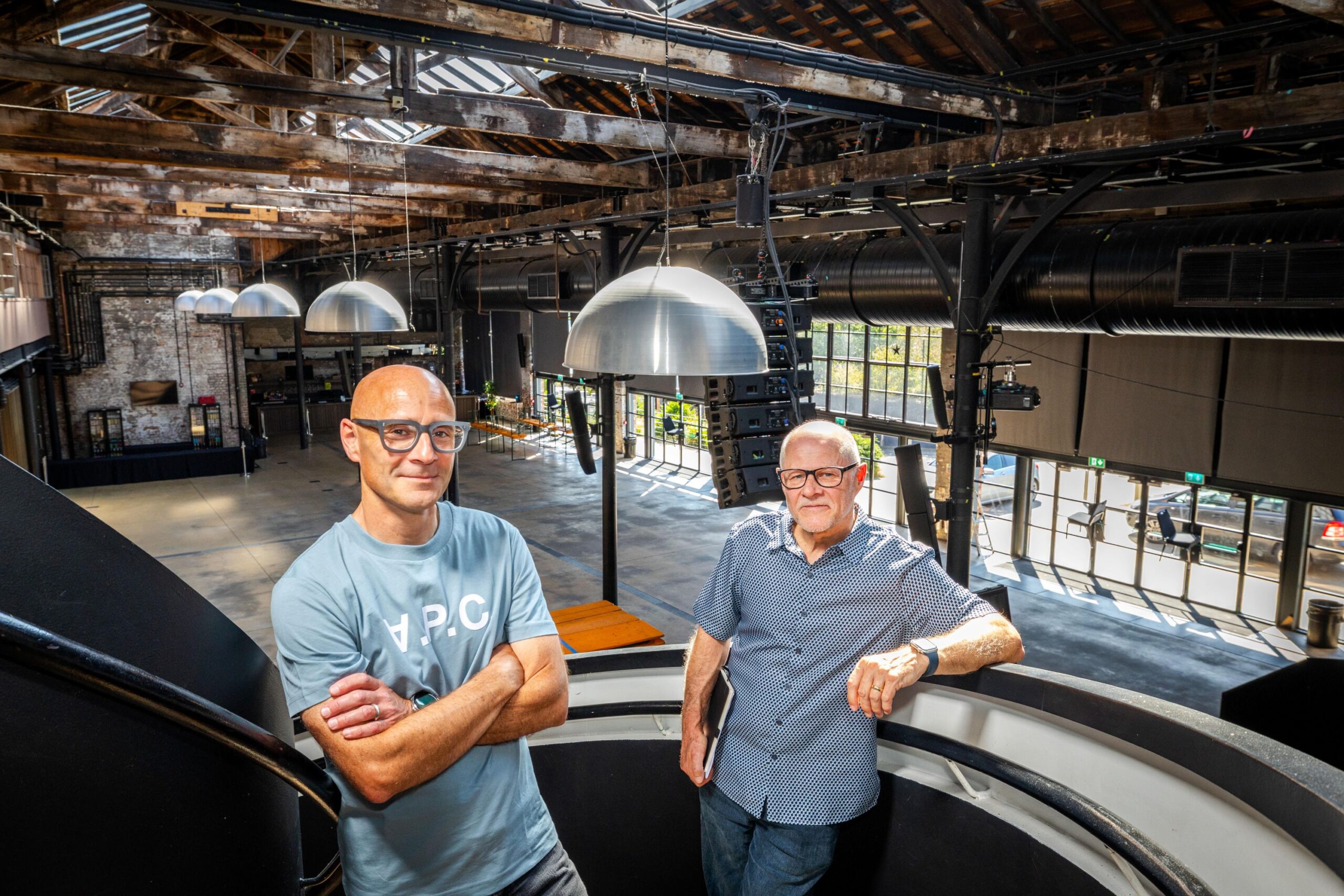
Work Beyond Walls – Enough with the return-to-office debate; what if we ran a live experiment?
Work Beyond Walls turns Newcastle’s Boiler Shop into a live workplace experiment, asking what makes an office worth the journey.
3–5 minutes -

The recognition gap: are we solving for the right thing?
There is a familiar moment in employee experience work when the engagement survey closes. The comments are read, themes are lifted into a narrative, and it is no great surprise when recognition surfaces as one of them. What usually follows is a hive of activity around recognition programmes. Either a relaunch of the one that…
4–6 minutes
Most Read
Get it in your inbox
The EMEX weekly newsletter — insight for HR leaders every Thursday.
Advertisement